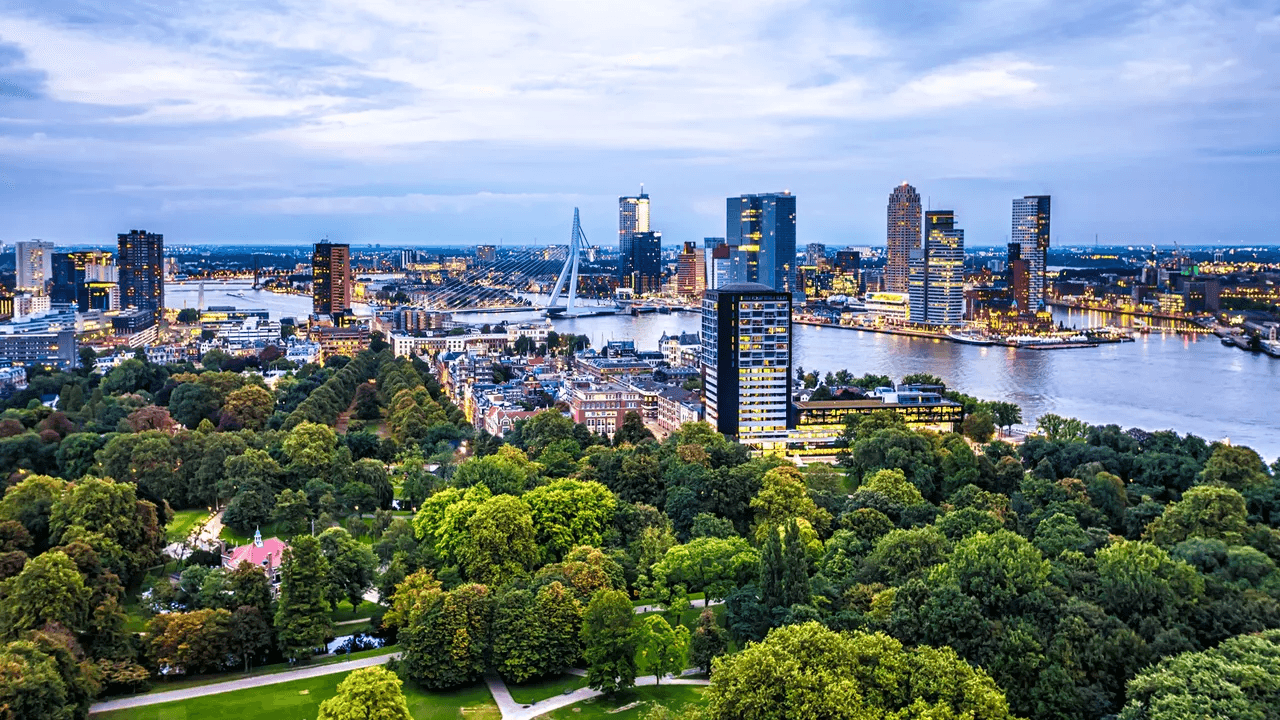
In the first half of the 19th century, Rotterdam struggled with foul-smelling and disease-causing canals. These canals served both as open sewers and as sources of drinking water.
Who was the master mind of the Brave Decision?
In response to this dire situation, city architect Willem Nicolaas Rose (1801–1877), later also Chief Government Architect, designed the Water Project in 1841 together with hydraulic engineer Jan Arent Scholten (1792–1876).
The plan involved admitting fresh water from the Nieuwe Maas river into two newly constructed canals (singels), allowing the polluted canal water to be flushed and renewed. Initially, the city council considered the project too expensive, and it took another cholera epidemic before construction finally began in 1854. The project led to a substantial improvement in the quality of the city’s surface water. The singels were landscaped by Jan David Zocher and Louis Paul Zocher, transforming them into highly attractive residential environments for Rotterdam’s wealthy citizens.
What was the impact or result of this Brave Decision?
In later urban expansions, singels have consistently played an important role and continue to serve as vital carriers of Rotterdams identity. The Heemraadssingel, part of the urban plan by Gerrit Jan de Jongh, is a prime example. Here, the problem-solving potential of this urban design concept was further developed: the singel as a public space, a route for access, a water management system, an ecological corridor, and an address – all integrated into a coherent public space. A compelling example of how multiple urban challenges can be solved in one unified design.